
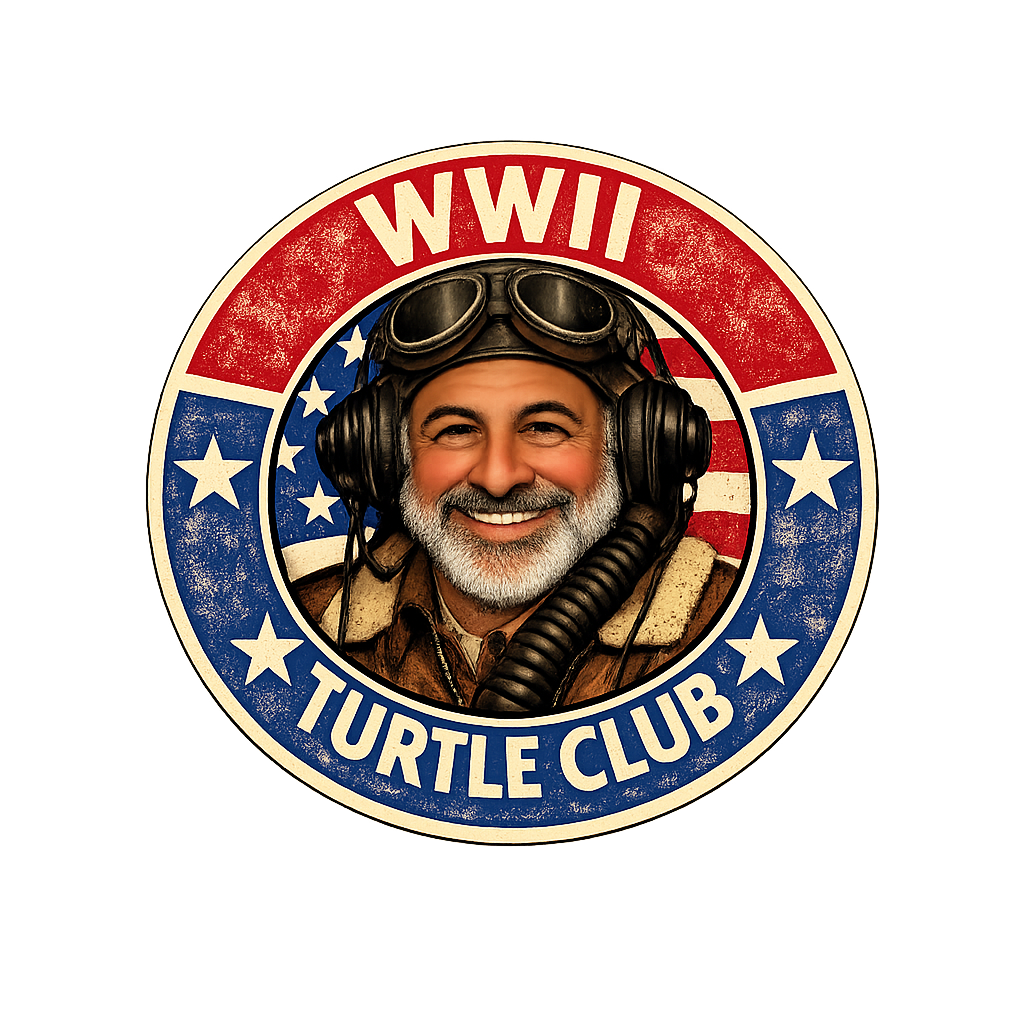
Born on March 25, 1917, Ervin William Reed entered the world as no ordinary child. From his earliest days, those around him noticed something remarkable — Ervin seemed to absorb everything. Every face, every word, every detail of the world around him was catalogued in his mind with startling precision. Doctors would later marvel at his extraordinary photographic memory, a gift that would define his life and forge his legend.
But gifts, especially unusual ones, are not always understood by children. Young Ervin moved through the world slowly and deliberately, pausing to take in everything around him while other children rushed ahead. “Why do you move so slow?” his classmates teased. “You’re just like a turtle!” Rather than shy away, Ervin smiled. He had learned early that the turtle, patient and deliberate, always gets where it’s going.
Ervin grew up on the sprawling Reed Estate, a self-sustaining 3,000-acre property nestled in the countryside. His father, Cecil Reed, was a tall, dark-haired businessman of sharp instincts and quiet determination, who had built the family’s wealth through strategic investments in industries including Boeing, Chrysler, and European markets.
His mother, Juanita Reed, was a woman of extraordinary grace and compassion, hailing from a prominent family in Brazil. During the Great Depression, Juanita devoted herself to humanitarian work, joining the “Angels on Horseback” initiative alongside Mary Breckinridge — training nurses to bring medical care to isolated families on horseback. Her efforts significantly reduced infant and maternal mortality rates and earned her national recognition.
Young Ervin’s world was a paradise of wide-open land, adventure, and loyal companions. He roamed the estate freely, accompanied always by his two beloved pets — “Sweet,” a gentle donkey with long ears and a soulful bray, and “Jackie,” a spirited Jack Russell Terrier who rode on Sweet’s back as they roamed the property together.
In 1919, Cecil met Captain Jamie Mathewson, a South African WWI flying ace, during a trip abroad. Jamie became the family’s personal pilot — and far more than that. He became a mentor and father figure to young Ervin, teaching him to fly, to lead, and to carry himself with quiet confidence. It was Jamie who first called him “Turtle” with genuine affection, cementing a nickname that would follow Ervin across oceans and into history.
At school, Ervin’s deliberate nature continued to earn him teasing. “Are you a turtle?” classmates asked, watching him pause and consider while others rushed to answer. But Ervin’s quick wit and warm spirit won people over, and those same classmates soon became his closest friends.
In 1935, with Jamie beside him, Ervin completed his first solo flight in a Taylor Craft Piper — navigating turbulence, rain, and a mountain crossing to land triumphantly at Westford Airfield before returning home to a mentor’s approving nod. He was a pilot. In 1939, Ervin graduated from college with a degree in Business and foreign languages, and his proud parents gifted him a 1939 Stearman Bi-Wing plane.
When World War II broke out, Ervin answered the call without hesitation. He joined the U.S. Army Air Corps’ 8th Air Force, flying the celebrated P-51 Mustang in combat missions over Europe. His photographic memory proved as valuable in the cockpit as it had been in the classroom — he recalled terrain, weather patterns, and enemy formations with a precision that astonished his commanders. He finished the war with 28 confirmed kills and the title of Flying Ace, earning the fierce respect of his squadron, who called him the “guardian of the skies.”
Among his most memorable experiences was a classified night mission alongside a Choctaw Code Talker — a Native American soldier whose ancestral language served as an unbreakable battlefield code. Ervin flew escort as the Code Talker’s voice carried commands through the darkness that no enemy ear could decipher. The mission was a flawless success.
Afterward, one of the Code Talkers leaned in and said quietly: “We’re fighting for this country, but we’re also fighting for our people, our history, and our future.” Ervin, who had spent a lifetime being underestimated, heard those words and felt them land somewhere permanent inside him. He carried that conversation for the rest of his life.
After a particularly harrowing mission, Ervin and his fellow pilots gathered in a British officers’ club on a rainy night — ale in hand, laughter the only medicine available. Someone proposed a fraternity. The name came naturally from the question Ervin had heard all his life: “Are you a Turtle?”
Then came the matter of a password. Ervin settled it with a grin: “Well, lads, I do have a pet donkey back home — a sweet little thing I call my ass. How about: ‘You bet your sweet ass I am’?” The room erupted. The Turtle Club was born — and with it, a tradition of humor, loyalty, and brotherhood that outlasted the war itself.
Despite the Reed family’s considerable wealth, Ervin felt a deep calling to give back. He purchased an old warehouse and transformed it into a vocational business school, placing above its entrance the motto that had followed him his entire life:
“Are You A Turtle?”
The school offered:
Ervin’s vision spread. Local schools adopted his model under the name “Industrial Arts,” inspiring a generation of self-reliant, skilled tradespeople across the region.
In time, the community honored Ervin William Reed with a statue — immortalizing him as the Imperial Turtle, a symbol of patience, wisdom, loyalty, and laughter. His life proved what his childhood classmates never imagined when they first called him “Turtle” — that moving deliberately, seeing everything, and remembering it all is not a weakness. It is the greatest strength of all.
To this day, those who knew him still smile when someone asks: “Are you a Turtle?”
“You bet your sweet ass I am.”
Chapter 01: A Child Unlike Any Other
Chapter 02: The Reed Family — Legacy and Love
Chapter 03: Companions and Caretakers
Chapter 04: Captain Jamie Mathewson
Chapter 05: School Years
Chapter 06: First Flight
Chapter 07: College and the World Beyond
Chapter 08: WWII — Guardian of the Skies
Chapter 09: A Mission with the Choctaw Code Talkers
Chapter 10: The Birth of the Turtle Club
Chapter 11: Coming Home
Chapter 12: The Vocational School
Chapter 13: The Eternal Turtle